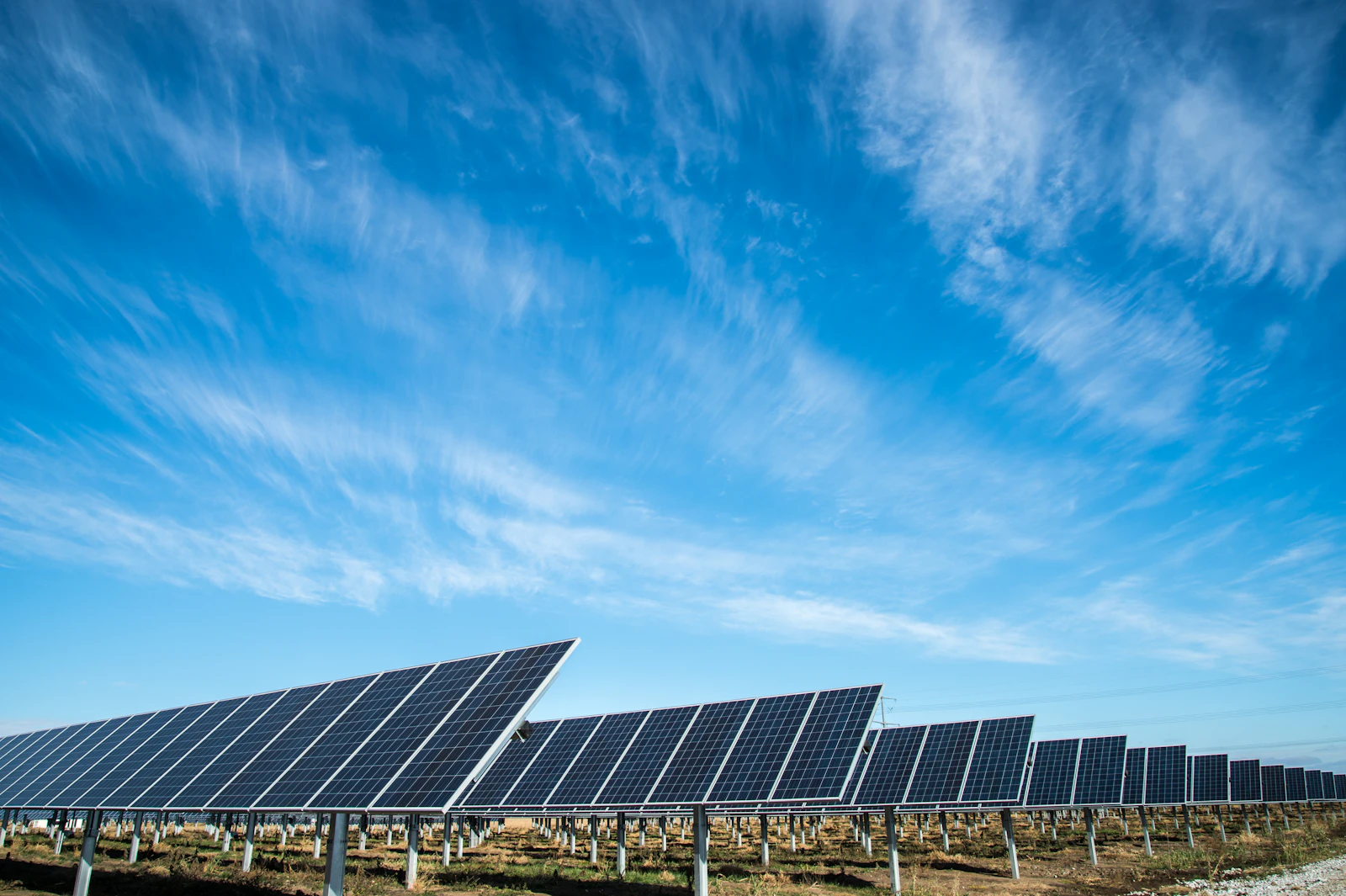
- The five, side by side
- String or central is the actual choice
- 1. Huawei: the string inverter that ate the plant
- 2. Sungrow: the company that will quote both
- 3. Sineng Electric: the central specialist
- 4. SMA: the datasheet a bank will read
- 5. Power Electronics: modules you can lift out
- Also worth a look
- The rating that matters is the hot one
- What to lock before notice to proceed
- Where ShineTong fits
- Related reading
- Frequently asked questions
- Who are the largest on-grid PV inverter manufacturers?
- Should a utility plant use string inverters or a central inverter?
- What does grid-forming mean on a solar inverter?
- Are 2,000 V inverters worth specifying yet?
- Why is the 40°C rating different from the nameplate?
- Sources
A 100 MW solar plant does not buy an inverter the way a house does. The shortlist that keeps winning utility tenders is Huawei, Sungrow, Sineng Electric, SMA and Power Electronics. The first two will quote you a string inverter the size of a wardrobe. The other three will quote you a central inverter the size of a shipping container. Those are different plants, and the brand decision is really an architecture decision.
This ranking is for grid-tied, ground-mount projects. It ignores residential hybrids on purpose. Huawei and Sungrow sit at the top because they can fill a purchase order in the volumes an EPC actually needs. Sineng is the central-inverter specialist that shows up wherever Chinese EPCs build. SMA and Power Electronics earn their place on bankability, grid code and the fact that a lender in Europe or the US will recognise the name without a workshop.
Last updated: October 2026. Ratings are from manufacturer datasheets. Market shares are estimates from Wood Mackenzie, JMK Research and GM Insights, and they do not all measure the same thing. A scorecard rank is not a shipment rank. Read the footnotes in your own bid before you repeat a percentage.
The five, side by side
| Rank | Manufacturer | Utility product | Typical block | DC voltage shipping today | Why it wins a tender |
|---|---|---|---|---|---|
| 1 | Huawei | Large string | Roughly 200–330 kW per unit | 1,500 V | Volume, service software, no single inverter can take down the block |
| 2 | Sungrow | Central and large string | Multi-megawatt skids and 350 kW class strings | 1,500 V | The widest utility catalogue and the largest central-inverter share |
| 3 | Sineng Electric | Central, turnkey MV skid | About 4.8 MW, with larger skids quoted | 1,500 V | Price and presence on Chinese and Indian utility jobs |
| 4 | SMA | Central | Sunny Central UP, up to 4,600 kVA | 1,500 V | Grid code, documented service life, a name banks already use |
| 5 | Power Electronics | Modular central | HEMK, up to 4,390 kVA at 40°C on the 690 V frame | 1,500 V | Field-replaceable modules and a US grid-code paper trail |
Notice what is missing. Nobody on this list is shipping a 2,000 V plant as the default. Sales teams will talk about 2,000 V as the next design voltage, and a few pilots exist, but the datasheets you can buy against today — SMA's Sunny Central UP, Power Electronics' HEMK, the Sineng units shown at SNEC 2025 — still top out at 1,500 V DC. Specify 1,500 V unless the module, the cable, the combiner and the inverter are all certified at the higher voltage. One of them being "ready" is not a system.
String or central is the actual choice
A central inverter puts one large converter, usually outdoors on a medium-voltage skid with its own transformer, behind a big DC field. When it stops, a lot of megawatts stop with it. A utility string design puts many 200–350 kW inverters along the rows, so one failure is a nuisance rather than an outage, at the cost of more AC cable, more communications points and more things to commission.
GM Insights' 2026 central-inverter outlook put Sungrow at about 23.5% of that segment and the top five — Sungrow, Sineng, TMEIC, FIMER and SMA — at about 55.5% combined. Huawei is not in that central ranking because Huawei's utility business is string inverters. If your consultant's report only counts central units, it has deleted the largest string vendor from the comparison. Ask which architecture the percentage refers to before you put it in a board paper.
The market these companies are fighting over is not growing for the moment. Wood Mackenzie expects global inverter shipments to fall 2% to 577 GWac in 2025 and a further 9% to 523 GWac in 2026, after a record 2024. Utility buyers get sharper prices in a shrinking year. They also get suppliers who will promise grid features in the bid and argue about them at commissioning. Write the features into the datasheet reference, not into the brochure.
1. Huawei: the string inverter that ate the plant
Huawei's utility offer is a string inverter in the roughly 200–330 kW class, at 1,500 V, with multiple MPPTs so a tracker row does not have to be electrically perfect. The commercial argument is availability. Lose one string inverter and you lose a fraction of one block. Lose a 4 MW central inverter and you have a crane visit. Huawei pairs that with its own optimiser story, its own plant controller and the FusionSolar monitoring stack, which many EPCs already have staff trained on.
Huawei shared the top of Wood Mackenzie's 2026 inverter scorecard with Sungrow, and the two were the only manufacturers to clear every criterion on that scorecard, including service, manufacturing footprint and financial strength. The caveat for a US or some European bids is not the hardware. It is whether the owner, the lender or the cybersecurity review will accept a Chinese vendor with a large software layer on a generation asset. Several markets now ask that question formally. Have the answer before you design the DC field around Huawei's MPPT count, because redesigning the strings later is expensive.
2. Sungrow: the company that will quote both
Sungrow is the awkward competitor because it will sell you the central skid and the big string inverter, then let your engineer pick. Its 350 kW class string inverters sit in the same design conversation as Huawei's. Its central inverters are the reason GM Insights ranks it first in that segment, and Indian shipment data shows the same pattern at country scale: JMK Research recorded Sungrow, Sineng and FIMER as about 96.7% of central-inverter shipments in India in the fourth quarter of 2025, with Sungrow alone above 5 GW of inverters of all types in that quarter.
For a buyer, the practical advantage is coverage. A developer with plants in China, India, the Middle East and Europe can keep one vendor across climates, and Sungrow's service companies are already in those places. The disadvantage is the same as any vendor that sells everything: the bid can be a catalogue dump. Pin the quotation to a model, a temperature rating and a grid-code certificate. "Sungrow equivalent" is not a specification.
3. Sineng Electric: the central specialist
Sineng, based in Wuxi, is the name that appears once Chinese EPCs are building outside China and once Indian utility jobs are counted properly. At SNEC in June 2025 the company showed a 4.8 MW central inverter and talked through turnkey skids at 8.8 MW and 9.6 MW, the point of the larger block being fewer transformers and less AC copper per megawatt. It also still sells string inverters — a 150 kW unit was on the same stand — so it is not ignorant of the other architecture. The centre of the business is the big converter.
Sineng wins on price and on being specified by EPCs who already installed it last year. It loses, in some lenders' credit papers, on the thinner international service record compared with SMA or Sungrow. If the plant is in a country where Sineng has a spare-parts warehouse and a commissioned reference of similar size, that objection is lazy. If the plant is the first unit in that country, price a spare inverter module and a technician's mobilisation into the EPC cost. The purchase price will not include them.
4. SMA: the datasheet a bank will read
SMA's Sunny Central UP is rated up to 4,600 kVA. SMA's own description says that power means 17% to 54% fewer inverters than the previous generation, on true 1,500 V DC, with a claimed service life of 25 years and a large cut in self-consumption. The unit is sold as the core of a medium-voltage solution that can include the transformer. None of that makes it the cheapest inverter in a Chinese tender. It makes it the inverter that is easiest to leave in the design when the lender's technical advisor has a veto.
Grid-forming is where SMA is genuinely ahead, and where buyers muddle the products. In September 2026 SMA took the first certification under Germany's VDE FNN guideline for grid-forming capability and inertia. That certificate is for the Sunny Central Storage UP-S, the battery inverter, not for the PV inverter. A solar plant without a battery cannot offer the same inertia product, because inertia is energy delivered in the first moments of a frequency event, and a PV array does not store any. If the grid operator is paying for inertia, you are buying a storage inverter and a battery. If someone offers "grid-forming" as a firmware tick on a PV-only central inverter, ask which certificate, on which product, in which market.
5. Power Electronics: modules you can lift out
Power Electronics, in Llíria, near Valencia, builds the HEMK as a modular central inverter: up to four field-replaceable power modules, 1,500 V DC, and a datasheet that rates the largest 690 V frame at 4,390 kVA at 40°C and 4,075 kVA at 50°C. The product page advertises up to 5,260 kVA. Both numbers can be true for different frames and voltages, which is why the purchase order should cite the datasheet row, including the temperature, and not the homepage. The cabinet weighs roughly 5.2 to 5.5 tonnes. This is not a unit you service by swapping a string inverter off a pallet.
The design point is the replaceable module. A failed power stage comes out of the cabinet instead of idling the block until a complete inverter can be built. Bus Plus, the DC coupling option, lets the same platform take a battery converter alongside the PV, which is the retrofit path a lot of 1,500 V plants will use when they add storage later. In a February 2025 briefing to ERCOT, Power Electronics also put on paper what grid-forming costs in hardware: a grid-forming kit, different models, and overload headroom (they showed 150% for 0.2 seconds) that a grid-following inverter is not required to have. Budget that as equipment, not as a software option.
Also worth a look
TMEIC, the Toshiba-Mitsubishi joint venture, sits in the central-inverter top tier on reliability and high-voltage industrial experience, and it is the name Japanese and many US utilities already have on an approved list. FIMER remains a central-inverter supplier with real Indian volume — it was the third name in that JMK central-inverter split — after its recapitalisation. Ingeteam (Spain) is the other European central vendor EPCs shortlist when they want a European factory that is not SMA. On the string side, GoodWe, Solis and Growatt all sell utility string inverters and will be in the price envelope below Huawei and Sungrow. And the corporate map moved in January 2026: GM Insights reported that ABB had bought Gamesa Electric's power-electronics business and was back in utility inverters. Check whether a "Gamesa" skid in an old specification is now an ABB product with a different service contract.
The rating that matters is the hot one
Every central inverter on this page derates as the air temperature rises, and the brochures quote the cool number. Power Electronics publishes both: 4,390 kVA at 40°C and 4,075 kVA at 50°C on that 690 V frame, which is about 7% gone before the site hits its worst afternoon. SMA sells the cooling system as a feature precisely because the alternative is lost energy on the days the plant should earn the most. Ask for the power curve at the 99th-percentile ambient of your site, at the altitude you are actually building, and at the power factor the grid code forces you to hold. A 0.9 power factor requirement cuts kilowatts even when the sun is perfect.
Then count the DC inputs against the combiner design. A HEMK frame takes up to 20, 30 or 40 DC inputs depending on size. A string-inverter plant has no DC combiner of that kind and a great deal more AC trunk cable. The inverter choice moves copper from one side of the skid to the other. It also moves the fault. Centralised DC means a combiner or a DC breaker failure can still take a large field down, even if the inverter itself is modular. Specify the DC protection as part of the inverter package, not as a line the electrical contractor "will sort out".
Need 1,500 V combiners, DC breakers or surge protection for a utility block?
What to lock before notice to proceed
- Architecture in one sentence. Central skid or distributed string. Do not let the bid come back with a mix you did not model.
- Power at site temperature and altitude. The 50°C number, not the 25°C number, and the derate above 2,000 m if you are on a plateau.
- Grid code by certificate. IEEE 1547, Rule 21, or the national code, on the exact model. A family certificate is not a model certificate.
- Reactive power at night. Several of these units can inject reactive power after dark. If the grid contract pays for that, it has to be in the hardware, not assumed.
- Grid-forming, named properly. PV-only, PV-plus-storage, or storage inverter. Ask for the certificate. SMA's 2026 inertia certificate is the battery unit.
- Replacement plan. A string design wants a spare inverter on site. A modular central design wants a spare power module and a trained crew. A sealed central design wants a spare inverter and a crane.
- Cybersecurity paperwork. Plant controllers, firmware update paths and remote access are now bid items in North America and Europe. Wood Mackenzie's own ranking commentary says buyers have started scoring them. So should you.
- Who owns the medium-voltage skid. Inverter, transformer, switchgear and the plant controller must have one commissioning lead. Split contracts are where utility projects lose months.
Where ShineTong fits
ShineTong does not build central inverters or 300 kW string inverters, and we will not pretend a sourcing desk replaces Sungrow or SMA on the AC skid. The DC field in front of those inverters is a different supply chain, and it is the one we are in: combiner boxes at the voltages the inverter is actually rated for, DC breakers, surge protection and cable.
The mistake we see is a 1,500 V inverter specified in detail and a combiner copied from a 1,000 V job. The breaker, the fuse, the SPD and the connector all have to be rated for the DC voltage and the fault current the inverter datasheet declares — on the HEMK, the short-circuit current on the largest frame is in the thousands of amps. If you are procuring the inverter from one of the five above and want the DC collection gear quoted against that datasheet, send the inverter model and the string layout. We would rather decline a voltage we cannot support than ship a 1,000 V part into a 1,500 V field.
Quoting the DC side of a utility plant?
Send the inverter model, the DC voltage and the destination. We reply with combiner and protection options, documents and lead times. No public price lists.
Related reading
- Top 5 residential PV inverter manufacturers — houses, not plants
- Top 10 solar inverter brands in China
- Top 5 off-grid storage inverter suppliers
- Combiner boxes
- DC surge protection
Frequently asked questions
Who are the largest on-grid PV inverter manufacturers?
Huawei and Sungrow lead the global inverter scorecards, including Wood Mackenzie's 2026 ranking. For central inverters specifically, market estimates put Sungrow first, with Sineng, TMEIC, FIMER and SMA in the leading group. Huawei's utility business is mostly large string inverters, so a central-only ranking understates it. Power Electronics is the Spanish modular-central name most often added when a bid needs European hardware and field-replaceable modules.
Should a utility plant use string inverters or a central inverter?
String inverters in the 200–350 kW class limit the damage when one unit fails and simplify replacement. Central inverters of 4 MW and up cut the number of conversion points, transformers and communications devices, and they suit a uniform tracker field. The DC cabling, the AC cabling and the spare-parts plan all change with the choice. Pick the architecture before you pick the brand, then ask Huawei and Sungrow to quote string and Sungrow, Sineng, SMA or Power Electronics to quote central.
What does grid-forming mean on a solar inverter?
A grid-following inverter produces current that follows the voltage it sees. A grid-forming inverter sets voltage and frequency itself, which is what a grid needs when synchronous generators retire. Doing that for more than a moment requires stored energy and extra overload capacity. SMA's first certification under Germany's 2026 VDE FNN inertia rules was on a battery inverter, the Sunny Central Storage UP-S, not on a PV inverter. Treat "grid-forming" on a PV-only bid as a claim to be proven with a certificate.
Are 2,000 V inverters worth specifying yet?
Not as the default. The utility inverters in current datasheets from SMA, Power Electronics and Sineng are 1,500 V machines. A 2,000 V design only saves money if the modules, DC cable, connectors, combiners and inverter are all certified at that voltage and the local code accepts it. Mixing a 2,000 V inverter with 1,500 V balance-of-system parts is how a pilot becomes a punch list.
Why is the 40°C rating different from the nameplate?
Inverters derate as ambient temperature and altitude rise, and nameplates are often taken at a flattering condition. On Power Electronics' HEMK, the largest 690 V frame is 4,390 kVA at 40°C and 4,075 kVA at 50°C. Over a hot afternoon that gap is lost revenue. Ask every bidder for power at your site's design temperature, altitude and required power factor, and compare those figures, not the headlines.
Sources
- Wood Mackenzie — global solar inverter manufacturer ranking 2026
- Wood Mackenzie — inverter shipments, 577 GWac in 2025 and 523 GWac in 2026
- GM Insights — central PV inverter market, 2025 supplier estimates
- JMK Research — India renewable update, Q4 2025 inverter shipments (PDF)
- SMA — Sunny Central UP, up to 4,600 kVA
- SMA — first VDE FNN grid-forming certification, September 2026, storage inverter
- Power Electronics — HEMK modular central inverter
- Power Electronics — HEMK datasheet, power at 40°C and 50°C (PDF)
- SNEC 2025 — Sineng Electric on its 4.8 MW central inverter and larger skids
- Power Electronics briefing to ERCOT — grid-following versus grid-forming hardware, February 2025 (PDF)
